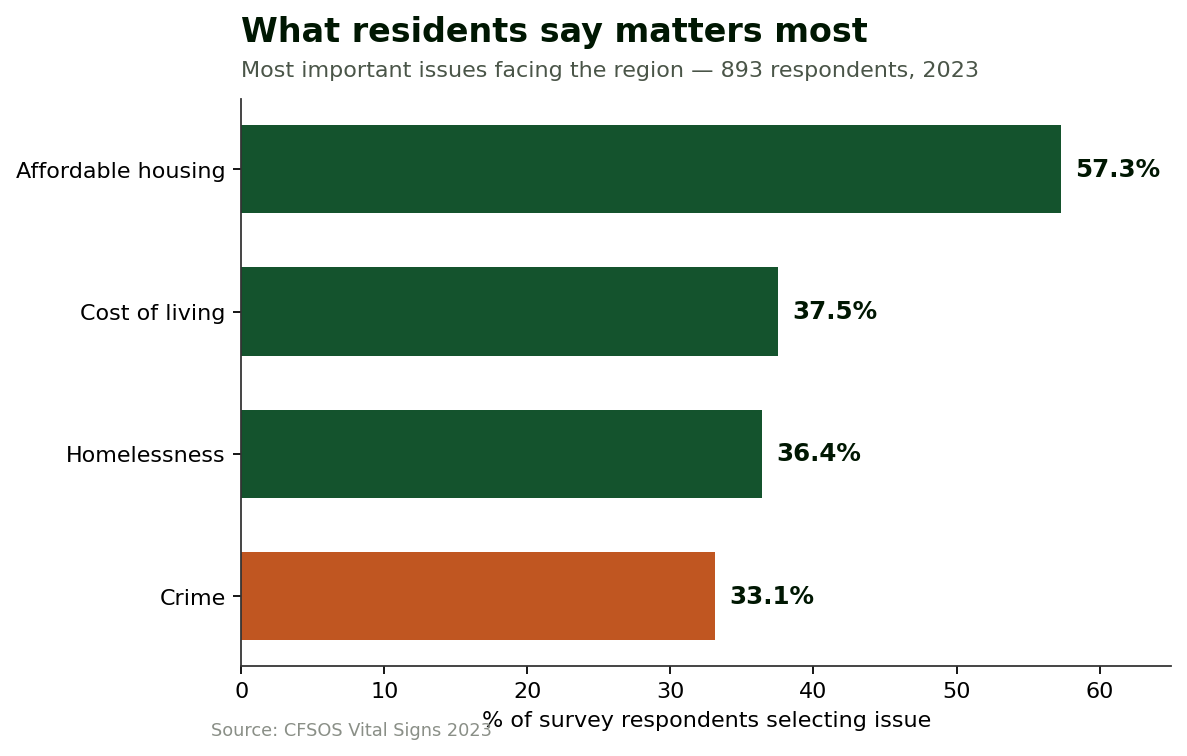
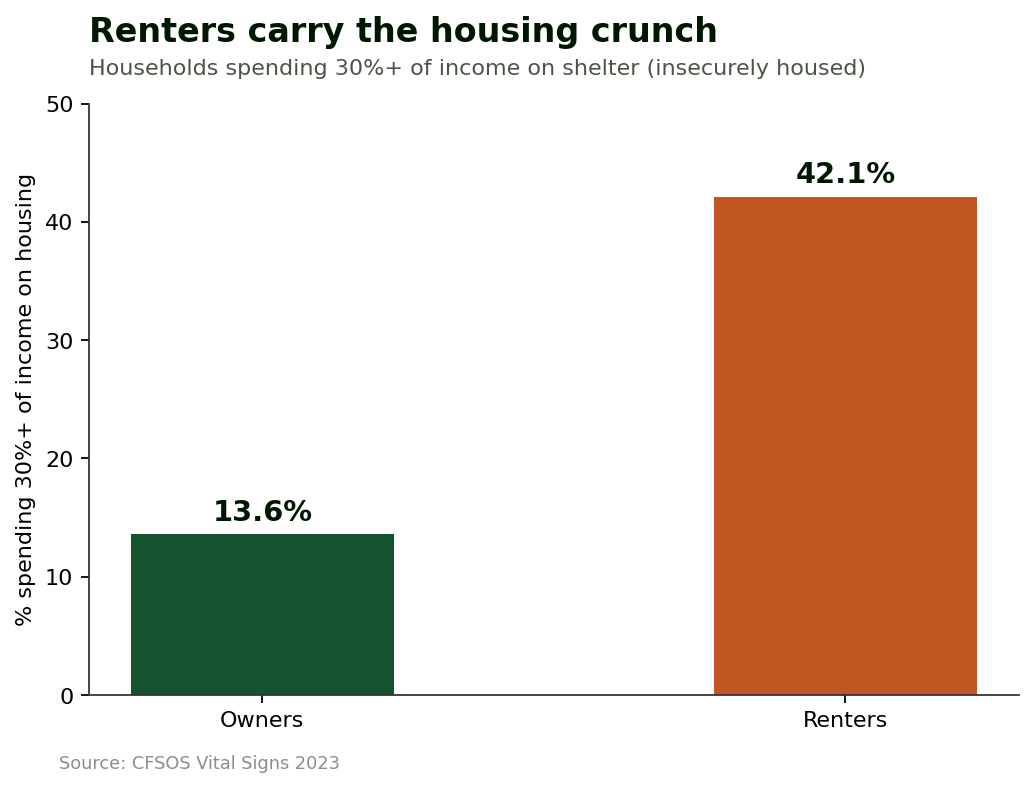
Penticton’s rental vacancy rate climbed to 2.6% in 2025 — up from 1.2% the year before, and the healthiest it’s been since 2013. That’s proof that building works. But 2.6% is still below the healthy range of 3–5%, average rents went up anyway, and the city’s own housing needs assessment found it’s struggling to attract nurses and doctors partly because they can’t find a place to live. I believe the answer is to keep the momentum: build more homes — and make sure affordability is built into what comes next. I’m a renter in this market myself; the 42% of renters carrying the housing crunch isn’t an abstraction to me. It’s my rent cheque too.
But Penticton just got a hard lesson in what happens when a city pins its housing strategy on a single mega-project. The Innovation District — pitched as 1,500 new units on 10 acres across from the Regional Hospital — was supposed to be the biggest residential development in the city’s history. Council changed the Official Community Plan and rezoned the land from industrial to mixed-use high density based on that promise. The developers marketed and sold presales. And then, in 2026, they pulled the plug. No building permits were ever submitted. Now there’s talk of converting the site into a hotel, seniors housing, and a large multi-use indoor sports and recreation facility. Let me be fair: indoor recreation space is a genuinely good idea — the whole region is short of it. But it isn’t the 1,500 homes Penticton was promised, and it isn’t the industrial land PIDA warned council not to give up, either. Either way, that’s 10 acres the city can’t get back.
My takeaway: Penticton can’t afford to bet its housing future on any single project, especially one controlled by out-of-town developers. The city needs a diversified housing strategy that doesn’t depend on one site or one promise. That means streamlining the permitting process for smaller infill developments — the duplexes, laneway houses, and missing-middle housing that fill gaps across existing neighbourhoods without requiring a mega-project to materialize. I’m an electrician — I work in the construction industry every day. I know what regulatory delays cost, and I know which ones are protecting safety and which ones are just adding time and money for no good reason.
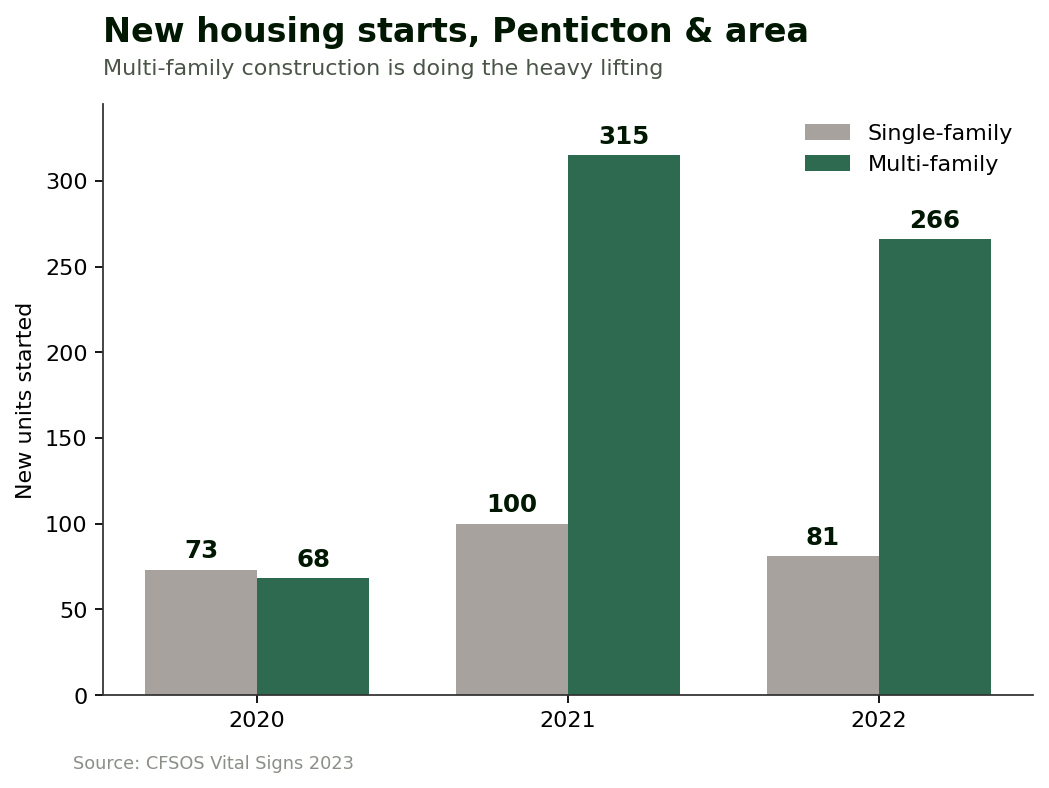
Streamlining isn’t just a slogan — the city has actually made real progress here. Building permit reviews dropped from an average of 8 weeks in 2017 to roughly 2.5 weeks in 2018 after a major modernization push, and CloudPermit (the online application platform) launched in 2024. The staff who delivered those improvements deserve credit. But there’s more to do.
I have four specific commitments on permits and approvals: expand Residential Xpress — the city’s express permit stream that aims to review eligible applications in 1 to 14 business days, currently capped at single- and two-family projects — to include carriage houses, the new 3–4 unit small-scale housing the province now requires every municipality to permit, and minor commercial tenant improvements; publish actual permit performance data monthly, by permit type, so the public can see real averages and not just published targets; create pre-approved typical designs for infill duplexes, laneway houses, and small multi-unit so builders submitting standard designs get a streamlined review path; and assign a single project coordinator to major applications requiring multi-department review, so files don’t bounce between Building, Planning, Engineering, and Fire with each handoff resetting context.
My housing priorities: streamline permitting for infill and missing-middle housing through an expanded Residential Xpress program and pre-approved designs, publish permit performance data monthly so progress is visible to the public, work with BC Housing on underused city-owned and publicly held land, learn from the Innovation District experience by never again redesignating industrial land based on a developer’s promise alone, and oppose anything that adds unnecessary cost to new builds without a clear safety or community benefit.
Affordable housing and homelessness are deeply connected, but they’re not the same problem. Anyone who drives the Channel Parkway has watched the encampment along it grow, shift, and come back — and many of the people living there are dealing with addiction and mental health crises that housing alone won’t solve. Housing and treatment are two halves of one system — treatment without housing sends someone back to the street the day they’re discharged, and housing without treatment puts a roof over active addiction and calls it progress. Both halves have to exist. But here’s the honest state of play in Penticton: one half is largely built, and the other never arrived. That’s why my focus is treatment.
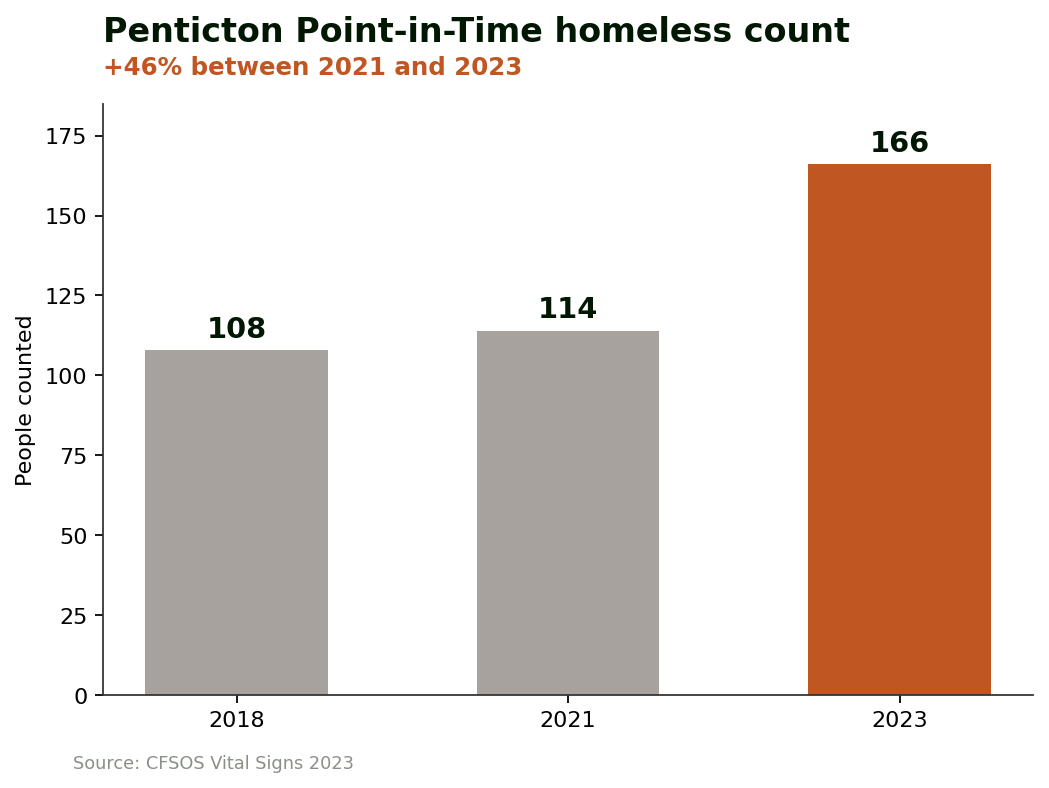
Penticton has lived both halves of this failure. The city already has more than 175 supportive housing units operated through BC Housing — Burdock House, Fairhaven, Compass Court, and Healing House — in a community with almost no treatment infrastructure to connect them to. Let me be precise, because precision matters here: Interior Health does run outpatient withdrawal support in Penticton — nurses helping people detox at home — and that team does good work. But there is not a single detox bed in this city. For the many people whose withdrawal isn’t safe to manage at home, the nearest bed is in Kelowna or further — if one is available at all. Residential treatment is 25 beds at Discovery House — men only. A woman in the South Okanagan seeking residential treatment has nowhere local to go. That’s the system we’re asking supportive housing to feed into: a landing pad with no runway.
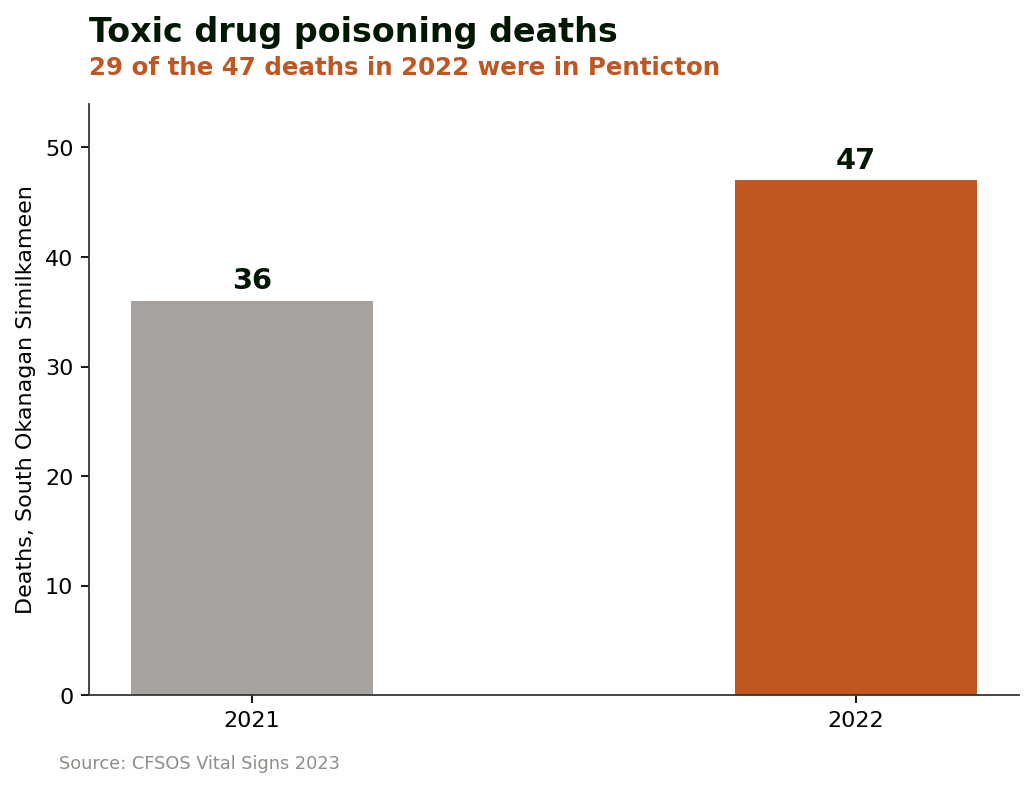
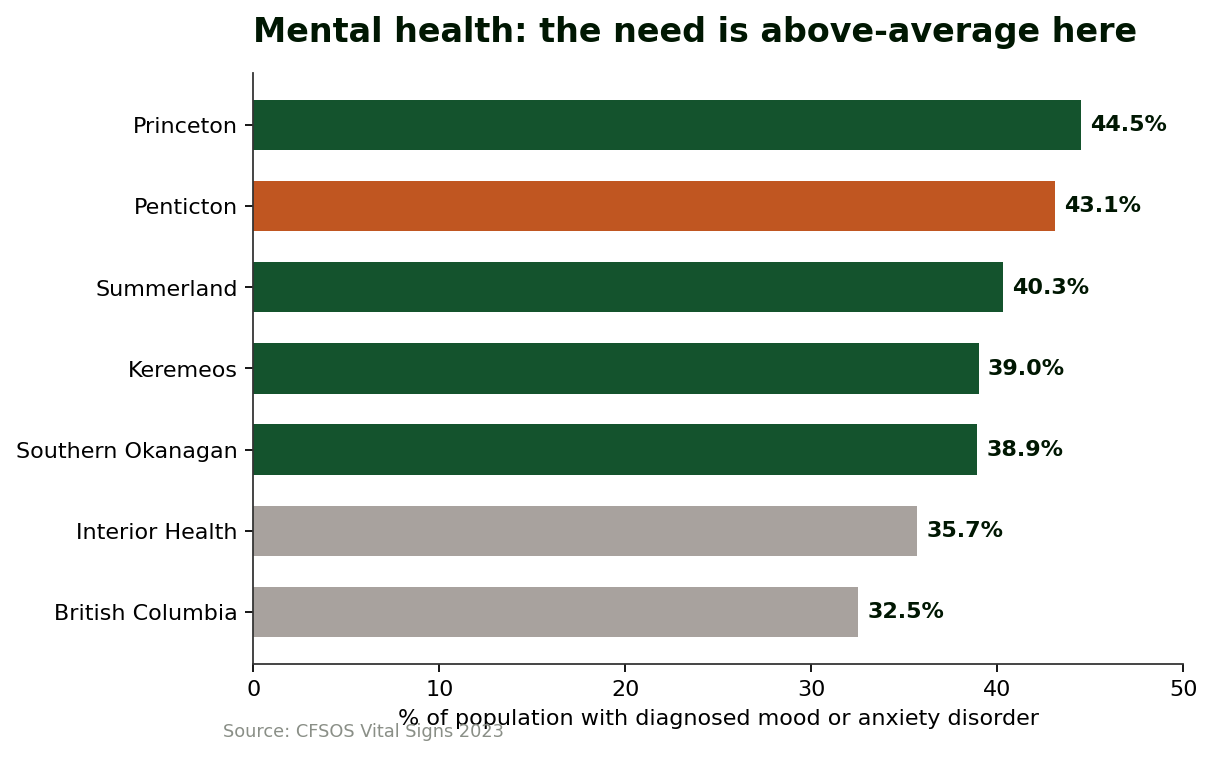
That’s the real lesson of the 50-unit tiny homes project council rejected 4-2 in late 2025. The province insisted the facility be designated “wet” — substance use permitted on site, with an overdose prevention service — as a condition of funding. The debate turned into a war over that label. I think the label was never the point. The point is that the province offered Penticton one half of a system and called it a whole solution: fifty more units of housing, in a city with zero local detox beds and no treatment pipeline for the people who would live in them. Whatever you think of wet housing, that math doesn’t work. And it doesn’t work in reverse either — if the province funded fifty treatment beds tomorrow with no transitional or supportive housing behind them, people would complete treatment and be discharged right back to the Channel Parkway.
So my ask — at the council table, to Interior Health, to BC Housing, and to the province — starts from where Penticton actually stands. This city has already done its share of the housing half: more than 175 supportive units, operating today. What it has never received is the treatment half those units were supposed to connect to. Penticton’s next investment belongs to treatment: inpatient detox, residential treatment — including beds for women — and recovery-oriented transitional housing, built here in the South Okanagan and connected to the supportive housing we already have. And when new supportive housing is proposed, my question will be the one nobody asked before the last 175 units went in: where’s the treatment pipeline that serves it? Both halves have to exist. In Penticton, treatment is the half that’s missing — and I won’t let anyone sell us more of the half we have while the other sits empty.
I support the Car 40 program — a joint mental health crisis response unit pairing RCMP with health workers — and it’s the kind of practical, compassionate approach Penticton needs more of. I’ll advocate for expanded Car 40 capacity alongside the housing-and-treatment system above, because crisis response is the front door to that system — and right now the front door opens into a hallway with too few rooms.
This isn’t a choice between compassion and safety — Penticton needs both. Compassion means a real pathway: somewhere to stabilize, somewhere to get treatment, and somewhere to live while you rebuild. Safety means addressing the street-level disorder that affects businesses, residents, and the people struggling most — which only actually improves when that pathway exists. I’ll push for solutions that treat people with dignity and actually move them toward stable, healthy lives.
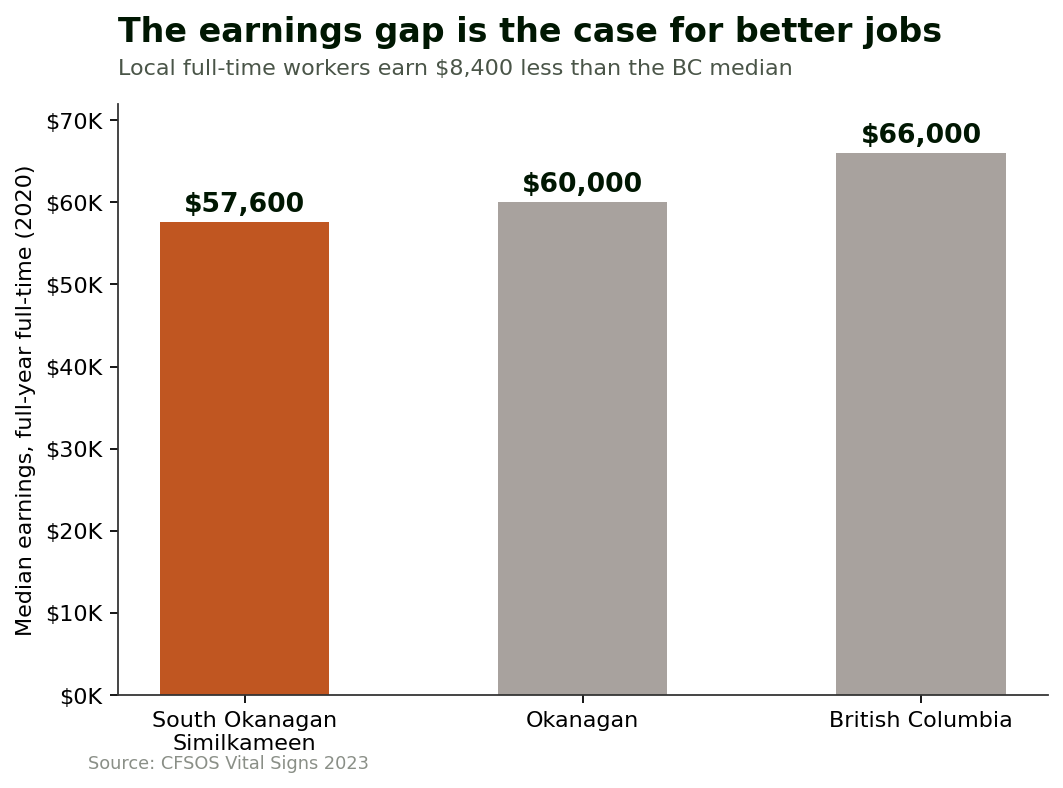
Most people think of wine and tourism when they think of Penticton’s economy. They’re important — but they’re not the biggest driver. Penticton’s industrial sector, represented by the Penticton Industrial Development Association, generates between $800 million and $1 billion in total economic impact every year. Half a billion dollars in direct sales flowing into the city from outside the province and outside the country — products manufactured right here and shipped to Australia, the Middle East, Europe, and South America. Companies like Waycon Manufacturing. Like AC Motor Electric, operating since 1956. These are the highest-paying private sector jobs in our community, with workers earning $60,000 to $80,000 a year.
And this sector is under threat. In 2025, Peerless — a trailer manufacturer that had been in Penticton for over 50 years — was bought out and moved its manufacturing to Saskatchewan. Nearly 80 jobs gone. That’s not ancient history. That happened last year, and it should be a wake-up call. Industrial land is shrinking — the Britco site was lost to housing development. Storage facilities are displacing productive manufacturing businesses on industrial-zoned land because they’re cheaper to operate, even though they create almost no jobs. Municipal taxes on industrial properties have doubled in four years. Electricity costs are punishing — one local manufacturer was paying $1 million a year in power costs a decade ago, and it’s only gone up since. Transportation access has deteriorated since the highway moved away from the industrial park. PIDA’s own past president has said the city needs “much greater investments in attraction and retention” just to stay competitive with communities up and down the valley who are actively recruiting these same businesses.
Here’s the number underneath all of this. In 2020, the median after-tax household income in Penticton was $61,600. In British Columbia it was $76,000. Across Canada it was $73,000. A household here takes home roughly $14,000 less than the provincial median and about $11,000 less than the national one — in a city where housing costs track the rest of the valley. That gap is the reason a young tradesperson looks at Kelowna or Alberta. Closing it isn’t done with a slogan; it’s done by protecting and growing the kind of employers that pay above that median, which is exactly what the industrial sector does.
I’ll be a champion for Penticton’s industrial sector on council. Specifically, I’ll push to turn the city’s 2025 Industrial Lands Overview into an actual adopted strategy. That report — commissioned after PIDA came to council in 2024 — surveyed our industrial land and flagged the pressures on it, then was received for information and left there. An inventory isn’t a plan. I want the follow-through: protected industrial-zoned land, a policy that stops conversion to storage and other low-employment uses, and a real answer on where industry expands. I’ll fight to keep industrial tax rates competitive. And I’ll push to grow the city-owned electric utility’s generating capacity (see Environment & Sustainability below) — because a city that owns its grid and generates more of its own power has options for supporting industry that no other Okanagan community has. I want to build that capacity first, honestly, before promising how it gets used.
I also want to bring back a tool Penticton has used successfully before: the Economic Investment Zone. From 2010 to 2019, the city ran an EIZ program that offered time-limited tax exemptions on the increased value of new construction in targeted areas. It worked — roughly 40 projects qualified, generating over $70 million in construction activity and more than 400 jobs, for a fraction of that in temporarily deferred taxes. The program lapsed in 2019 and was never renewed. I’ll push to create a new Economic Investment Zone aimed squarely at industry — incentivizing manufacturers to expand, redevelop, or relocate to Penticton, with the emerging UAV (drone) and aerospace sector as a prime target, so the tax incentive and the hub-building work below pull in the same direction. An EIZ doesn’t cost the city money up front; it forgoes a portion of future tax revenue on new value that wouldn’t exist otherwise — and once the exemption period ends, those properties pay full taxes on a much larger assessed value, permanently growing the tax base. Any new program would be built with clear entry points, time limits, and a defined end date, so it never becomes an open-ended giveaway.
Beyond protecting what we have, I want to grow what’s next. I have an ambitious goal — and I’ll be upfront that it’s the most ambitious thing on this platform: positioning Penticton as a centre for UAV (drone) development and testing in Western Canada. The opportunity is real and the model is proven. Pendleton, Oregon — a town smaller than Penticton — invested less than $500,000 to transform its quiet airport into one of America’s busiest drone test ranges. It now hosts companies like Amazon, Airbus, NASA, and Boeing, has created over 200 direct aerospace jobs paying $60,000 to $100,000 per year, and generates millions in annual economic impact.
Penticton has every advantage Pendleton had, and several it didn’t: a federally owned airport with underutilized capacity, diverse terrain for testing over lakes, mountains, orchards, and rangeland, Canada’s new streamlined BVLOS (beyond visual line of sight) drone regulations, and a location in the heart of BC’s wildfire country — where firefighting drone technology is being actively developed and desperately needed. This isn’t hypothetical: BC’s own FireSwarm Solutions is already flying Transport Canada-authorized heavy-lift wildfire-suppression drones and testing across the province — exactly the kind of anchor company a Penticton test range should be courting. The startup costs? Funded through federal and provincial programs built for exactly this: PacifiCan grants, the new Regional Defence Investment Initiative (RDII) — which is delivering $67.5 million in BC for defence and dual-use projects, with applications open through March 2028 — the Strategic Innovation Fund, and BC’s new $400 million Strategic Investments Special Account, which names aerospace and defence among its priority sectors, plus a portion of the city’s annual casino host revenue. Not property taxes.
And here’s my honest framing, because I won’t promise something no councillor can deliver alone: the airport is federally owned, the companies are private, and a hub is an outcome, not a bylaw. What I can promise is the work. In my first year, I’ll push council to commission a feasibility study and submit the PacifiCan funding application. If the math says go, Penticton moves with a head start. If it doesn’t, we’ll have spent grant dollars — not tax dollars — to find out. That’s how a city chases big opportunities without betting itself on them.
I’ll also be clear about what I won’t chase: data centres. They’re the shiny object of economic development right now, and they’re the wrong fit for Penticton — enormous power and water demands in a hot, dry valley, big land footprints on exactly the industrial land we’re already losing, and almost no permanent jobs per acre once construction ends. Every megawatt and every acre a data centre consumes is capacity I’d rather put behind manufacturers and aerospace jobs. Saying no to the wrong fit is part of having an economic strategy.
My economic vision is simple: protect the industrial base that already pays the bills, and build the next generation of industry on top of it. An industrial land strategy that stops the erosion. A revived Economic Investment Zone that rewards businesses for building here. A city-owned utility with growing generating capacity that keeps Penticton’s options in Penticton’s hands. A serious, feasibility-first run at a UAV (drone) hub that could bring aerospace jobs — and the industry conferences that come with them, filling the Trade and Convention Centre and downtown restaurants in the shoulder season (see Downtown Vibrancy). High-speed internet and tech-friendly infrastructure that let modern businesses operate from the South Okanagan. Tourism and agriculture aren’t going away — but they can’t be the only thing. A one-industry town is a vulnerable town. I want Penticton to be resilient — and I want it to be a city my generation doesn’t have to leave, because the surest sign of a healthy economy is young people who can afford to stay.
A living downtown — full of events, festivals, and foot traffic — is good for businesses and residents alike. I want to invest in Penticton’s cultural life and make the downtown core buzz year-round, not just in peak tourist season.
Ask anyone who was here in the ’80s and early ’90s and they’ll tell you Penticton used to be the place people drove to on a Friday night. Live bands, packed rooms, a downtown with a pulse after dark. Somewhere in the decades since, we traded most of that away.
I know exactly which night people bring up when I say that. July 1991: MC Hammer plays Penticton, things get out of hand, and a mob rolls the Peach into Okanagan Lake. Fair enough — that was a genuinely bad night for this city, and nobody’s asking for a repeat. But I’d gently point out that we responded to one riot with about thirty-five years of making sure nothing happens downtown at all. That’s overcorrecting. You can have a city where a 25-year-old can find live music on a Saturday and keep the Peach on dry land. Most cities manage it.
I live in the downtown core. I see firsthand what a festival or event does for the local economy — restaurants busy, shops buzzing, people out walking. Penticton already knows how to put on an event; what holds the downtown back isn’t a shortage of ideas, it’s friction. I want to work with the Downtown Penticton Business Improvement Area to cut the red tape for businesses and organizers hosting sidewalk events, pop-ups, and street activations — simpler permits, clearer rules, faster answers — so more of them happen, especially in the shoulder and off-season when the tourist crowds thin out and local businesses need the foot traffic most. And I want Penticton competing harder for conventions: every conference the Trade and Convention Centre lands fills restaurants, patios, and hotel rooms in exactly those months — including the UAV and aerospace industry events my Economic Diversification plan is built to attract. A city chasing a drone hub should also be the city hosting the sector’s conferences.
The Downtown Penticton Business Improvement Area has done good work branding the cluster of breweries, restaurants, and venues around Winnipeg Street and Westminster Avenue. Branding gives an area a story. The Official Downtown Community Plan coming this fall is the chance to give it teeth.
My contribution: a formal entertainment district designation — written into the zoning bylaw as a downtown entertainment overlay and anchored in the new Official Downtown Community Plan, so it carries the durability of Official Community Plan policy rather than the mood of any one council. A name on a banner is marketing. A zoning overlay is permanent. The 2024 zoning rewrite already permits restaurants, bars, lounges, live music, and cabarets throughout the downtown commercial zones. The 2025 amendment removed downtown parking minimums and restricted drive-throughs to protect the pedestrian realm. The remaining barriers aren’t what can open — they’re how late it can stay open, whether it can put a patio out without a six-month permit dance, and whether someone moving into a new condo upstairs can shut a venue down with a noise complaint two years later.
A formal entertainment district policy would address all three. Tiered closing hours by sub-zone, so a venue in the core can stay open later than one bordering residential streets. Decibel-based noise standards that give operators a clear number to design around, instead of vague nuisance rules. Pre-approved patio templates that turn a months-long permitting process into a one-form approval. And a right-to-entertain disclosure requirement on residential sales and rentals in the district, so new residents know what they’re moving into — and existing venues aren’t shut down by complaints from people who moved in next door to a brewery and then complained about the brewery.
Rules are one half of the equation. Investment is the other. A formal entertainment district designation also opens the door to a targeted Economic Investment Zone — the same tool I’m proposing for industrial development, returned to the downtown core where the original 2010–2019 program first proved it could work. That program catalyzed the Landmark Cinema brownfield revitalization, the breweries and distilleries that anchor today’s entertainment cluster, and several major commercial expansions. A new downtown EIZ — covering Main Street and the entertainment district — would offer time-limited tax exemptions on the value of capital improvements: patio buildouts, heritage facade restoration along Main Street’s historic frontage, soundproofing investments that meet the new decibel standards, kitchen and venue upgrades, and mixed-use redevelopments that add residential density above active commercial frontage. Building owners and operators currently sitting on the fence about whether to invest get a real reason to break ground. The city forgoes a portion of future tax revenue temporarily; once the exemption period ends, those buildings pay full taxes on a permanently higher assessed value.
This isn’t about giving businesses a pass to do whatever they want. It’s about giving operators, residents, and visitors the predictability that makes a real entertainment neighbourhood work — the kind of predictability Gastown, Yaletown, and Whyte Avenue already have. The branding work is done. Council’s job is to back it up with the policy framework — and the investment incentives — that make downtown a place people can count on for decades, not just for a launch party.
I believe in practical environmentalism — not slogans, but real programs that reduce waste, lower costs, and build a more resilient city. I have two specific plans:
Right now, every food scrap in Penticton goes into the garbage and gets buried at Campbell Mountain Landfill. That’s 40% of our waste stream, by weight, producing methane underground instead of becoming something useful. And we are surrounded by people who need exactly what it would become: this is one of Canada’s great agricultural valleys, and our growers pay for soil amendment and fertilizer that we are currently burying. A curbside organics program should be built with that end in mind — finished compost coming back to Okanagan orchards, vineyards, and market gardens at low or no cost, and to residents for their own gardens. Turning our biggest waste stream into an input for the industry that built this valley is the kind of loop a city our size should be closing. The RDOS has been trying to build a regional composting facility since 2016, but construction hasn’t started and the Agricultural Land Commission has rejected applications twice.
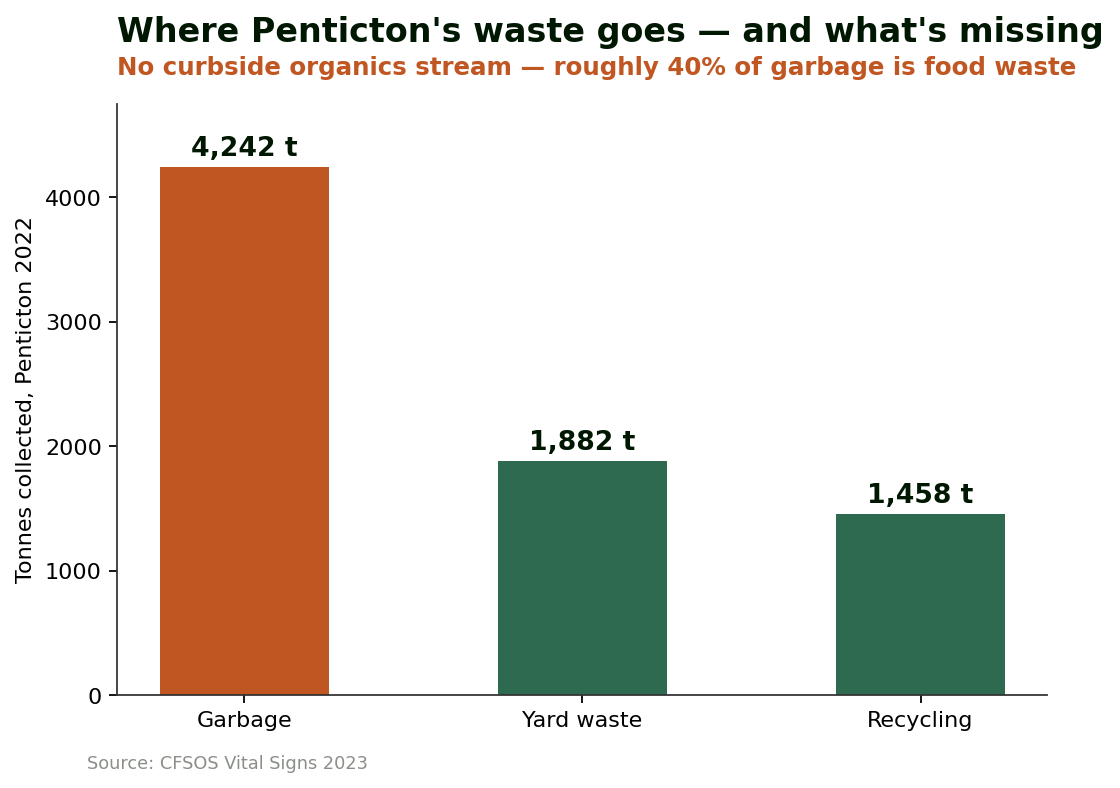
I won’t wait. In January 2025, Net Zero Waste Eastgate — a regional composting facility in the Similkameen Valley already serving Chilliwack — presented to council and offered at-cost processing at $50 per tonne, a fraction of what Metro Vancouver pays. I’ll push to launch an interim green bin program using Net Zero as a processing partner, getting bins on every curb within my first year on council, then transition to the RDOS’s local facility when it’s finally built. Estimated cost: roughly $7–$9 per household per month on the utility bill — not your property taxes. Startup costs covered by provincial waste reduction grants.
Council unanimously approved a solar microgrid project in February 2026 — solar panels on four city buildings plus battery storage, primarily for emergency backup at the hospital. That’s a solid first step. I want to go further. The SOEC, the Convention Centre, the Aquatic Centre, Public Works yards, and fire halls all have large roofs. The new $38 million fire hall should be designed with solar from day one.
Here’s the part that matters for your tax bill: the city pays the power bills on every arena, pool, fire hall, office and shop it owns, and those bills are paid out of the same operating budget your property taxes fund. Every kilowatt-hour a city roof generates is a kilowatt-hour the city doesn’t buy — and a dollar that stays available for roads, parks, and services instead of going to a utility bill. Penticton also owns its own electric utility, so power generated on city buildings carries no FortisBC wholesale markup; it feeds directly into a grid the city controls. Lower operating costs, reduced exposure to FortisBC rate increases, and a durable asset the city owns outright. I’m deliberately not promising today how every future kilowatt gets used — build the capacity first, and tomorrow’s council has options it doesn’t have today. Funded through the electrical reserve and grants — the same proven model as the microgrid. Pays for itself within 10–15 years. Produces essentially free power for decades after. With over 2,000 hours of sunshine per year, Penticton is one of the best locations for solar in all of Canada.
Penticton property owners have been hit with steep annual increases four years running — 9.5% in 2023, 5.31% in 2024, 7.88% in 2025, and 6.26% in 2026. Those don’t add up, they compound: the municipal levy is about 32% higher than it was four years ago. On top of that, 2026 utility increases add roughly $324 a year to the average home — a cost renters pay too, through rent. Some of that reflects costs deferred by previous councils. Some reflects real infrastructure needs. But the cumulative impact on families and small businesses is real, and residents deserve a councillor who asks hard questions about every dollar before it’s spent.
I won’t insult your intelligence with a blanket tax freeze promise. The city has a $38 million fire hall project, aging infrastructure worth $1.4 billion, and growing demand for public safety. Those costs are real. But I also won’t accept that the only answer is to keep reaching into taxpayers’ pockets year after year.
Here’s what I’ll do differently. Penticton has revenue sources that aren’t being used to their full potential:
The casino. As the host community for Cascades Casino, Penticton receives a share of provincial gambling revenue — $1.64 million in 2024/25, plus roughly $300,000 a year in land-lease payments. That money flows into a Gaming Reserve council can direct. Two honest notes: it’s less than it used to be — host payments move with the casino’s performance, and bricks-and-mortar gaming is under real pressure from online gambling — and it isn’t a bottomless account. That’s exactly why I’d spend it on economic development that grows the tax base rather than on operating costs that come back every year.
The electric utility. Penticton is one of only five cities in BC that owns its own grid. The utility generates an annual dividend for the city. My solar plan protects that dividend by cutting costs — nearly 90 cents of every dollar the utility spends goes to buying wholesale power from FortisBC, and every kilowatt-hour we generate on a city roof is one we don’t have to buy. Attacking the biggest line item directly, without raising anyone’s rates.
Grants. Federal and provincial programs exist specifically to fund the kind of initiatives I’m proposing. The microgrid project council just approved secured over $5.6 million in external funding. I’ll pursue every available dollar from PacifiCan, Innovate BC, the Canada Infrastructure Bank, and the FCM Green Municipal Fund before asking Penticton taxpayers for a cent.
The green bin program will be funded through a utility fee — roughly $7 to $9 per household per month — not property taxes.
My approach comes down to this: bring a tradesman’s eye to the budget. Know what things should cost. Know when something’s been padded. Know the difference between cutting corners and cutting waste. And most importantly — stop relying on property tax increases as the default answer to every question. Publish plain-language budget breakdowns so residents can see exactly where every dollar goes. Grow the revenue. Use the assets the city already owns. Chase the grants. Expand the tax base by bringing new industry and new jobs to Penticton.
Fiscal responsibility also covers what happens when things go wrong. Penticton’s experience with a council seat sitting empty for over two years — while taxpayers continue paying a councillor on mandatory leave who cannot perform any duties — exposed a gap in provincial law. The 2022 amendments to the Community Charter were the right call: officials facing serious charges should step away from their duties. But the law sets no limit on how long taxpayers pay for an empty seat, and no mechanism to restore representation to the voters who lost it.
There’s real momentum to fix this: Penticton’s own MLA has prepared legislation to extend mandatory-leave rules to provincial politicians, closing the gap in one direction. I’ll push council to advocate through UBCM for the other half. First, a 12-month threshold after which a councillor on mandatory leave transitions from paid to unpaid status — with full back-pay guaranteed if the charges are resolved in their favour. Second, a provision allowing council, by a two-thirds supermajority, to declare a temporary vacancy after 12 months and trigger a by-election, so voters aren’t left without representation for an entire term — with the original councillor’s right to seek office again fully preserved. These aren’t punitive measures. They protect the presumption of innocence and the public purse at the same time. Accountability isn’t a slogan. It’s a practice — and it should apply to the system itself, not just the people in it.
“I can’t promise your taxes will never go up. But I can promise that every time someone at that council table proposes an increase, I’ll be the one asking: have we used the casino money? Have we applied for the grant? Have we looked at what the utility can fund? And if the answer to any of those is no, the increase doesn’t have my vote.”
The lake-to-lake bike lane — and the South Main section in particular — became the most divisive infrastructure project in Penticton’s recent history. And the frustration was understandable.
Residents along South Main saw concrete barriers installed on both sides of a major thoroughfare, parking eliminated near their homes and businesses, lanes narrowed to the point where some people felt unsafe pulling out of their own driveways, and a design near the Sikh Temple that raised serious emergency access concerns. The project came in over budget at $9.1 million, up from the original $8 million estimate. Seventy-five people showed up to protest at City Hall. A public meeting about an infrastructure levy turned into a two-hour vent session about the bike lanes. Councillor Reynen himself said the project had “already caused enough headaches.”
I heard all of this — at doors, in conversations, and from people on both sides of the debate. Here’s where I land.
Active transportation infrastructure is a good thing for Penticton. Bike lanes, better sidewalks, and accessible routes help seniors who can’t drive, families who want their kids to ride to school safely, and everyone trying to get around without a car. That’s real. But good infrastructure has to be designed with the people who use the road every day — not imposed on them. And when residents say they feel unsafe pulling out of their driveways, or a business says they’re losing customers because nobody can park, those aren’t complaints to be managed. They’re design failures to be fixed.
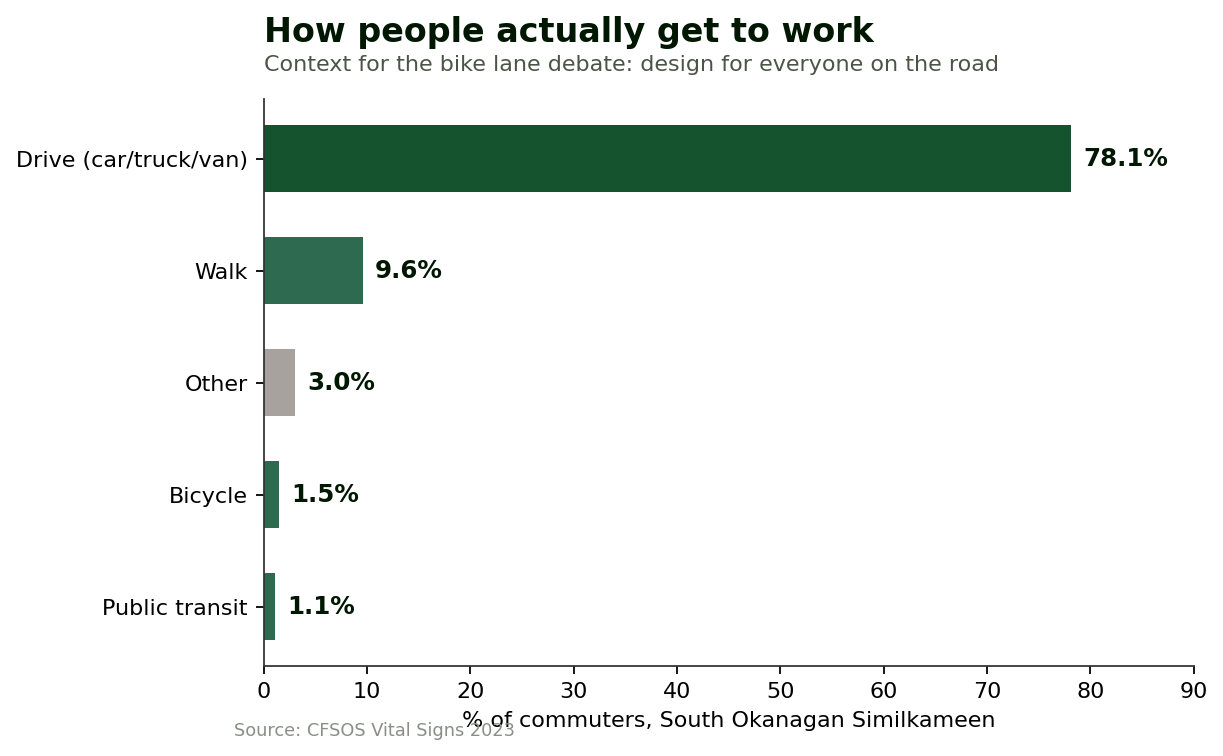
What went wrong on South Main wasn’t the idea of a bike lane. It was the process. The design moved forward without enough iteration. Concerns from residents and businesses were heard too late — after the concrete was already being poured, not before. And once people felt ignored, every subsequent conversation about infrastructure became poisoned by that experience.
My position: the lake-to-lake route is built and it’s not getting torn up. But Penticton has changed a lot of streets in a short stretch of time, and the city is still absorbing it. So my position going forward is simple — digest before we build more.
That means a deliberate slowdown on new traffic calming projects and street reconfigurations for the first part of the next term. Not a ban, and not a reversal. A pause on the pace, so the city can do three things it skipped last time: let residents and businesses actually live with the changes, measure how the completed projects are performing — real speed data, collision data, parking and business impacts, published — and rebuild the public trust that got spent on South Main. When a city rolls out change faster than people can absorb it, even good projects start losing.
That assessment has to include a formal sit-down with the people who drive our streets for a living: Penticton Fire, BC Emergency Health Services, and the RCMP. Emergency access concerns were raised about the South Main design after the concrete was poured — that’s backwards. Fire trucks and ambulances have to be consulted before a lane gets narrowed, not after. And this is more urgent than a normal review cycle: Penticton is a city between two lakes with a limited number of ways out, wildfire seasons are getting worse, and updated evacuation planning is coming. Every barrier, bollard, and narrowed lane we’ve installed is now part of how this city would move tens of thousands of people under pressure. Nobody has publicly reconciled the traffic calming build-out with the evacuation routes. Before we add more, I want that work done — emergency services at the table, in writing, in public.
Let me be clear about what does not slow down. Core infrastructure keeps moving: water and sewer mains, paving, sidewalk repair, storm water, the aging pipes and roads behind that $10.4 million annual renewal gap the city’s own budget admits to. That work is overdue, it’s what property taxes are for, and deferring it just makes it cost more later.
We have a cautionary tale forty minutes down the highway. For years, Osoyoos kept property taxes artificially low and put off its water and sewer renewal. The bill came due all at once: in late 2023 council approved a budget raising the average residential property tax about 37%, with sewer rates up 117% and water up 146% — an overall jump of roughly 39%, or about $1,500 on the average home in a single year. The town’s own staff said plainly that the infrastructure had been set aside for too many years while taxes rose only marginally and the systems kept degrading. A sewage lagoon had already failed. Hundreds of furious residents packed public meetings, council rescinded the budget and spent months cutting it back — but the pipes still needed replacing.
That’s what deferral actually buys: not savings, just a bigger bill with someone else’s name on it. Usually the next generation’s. I’m 26 — I’d be the one holding that bill, along with everyone my age raising kids here. So I’m not going to stand at a door and promise you a tax freeze while quietly letting the pipes rot. Pay for the renewal on schedule, honestly, a bit at a time. Don’t pass the burden to the next generation.
And if engineering staff identify a genuine, documented safety hazard — a dangerous school crossing, a corner with a collision history — that gets fixed on its own merits, immediately. A pause on discretionary redesigns is not a pause on safety.
Alongside that: genuine community consultation at the design stage — not an information session after decisions are made, but real input that can change the outcome. Full lifecycle cost estimates published before council votes. Honest post-construction reviews. And any future cycling or transportation project evaluated case by case on its own merits — not treated as a political litmus test where you’re either for all bike lanes or against all of them.
Infrastructure should make people’s lives easier. When it doesn’t, the answer isn’t to blame residents for being upset. It’s to slow down, prove the last project worked, and earn the right to build the next one.
Nearly a third of Penticton’s population — over 11,000 people — is 65 or older. That’s one of the highest concentrations of seniors of any city in Canada, half again the national average. Another 3,200 residents will join that group within this council term. More than 5% of the city is 85 or older. In Penticton, seniors’ issues aren’t a special interest. They’re the city’s daily reality — and a platform that doesn’t address them isn’t a complete platform.
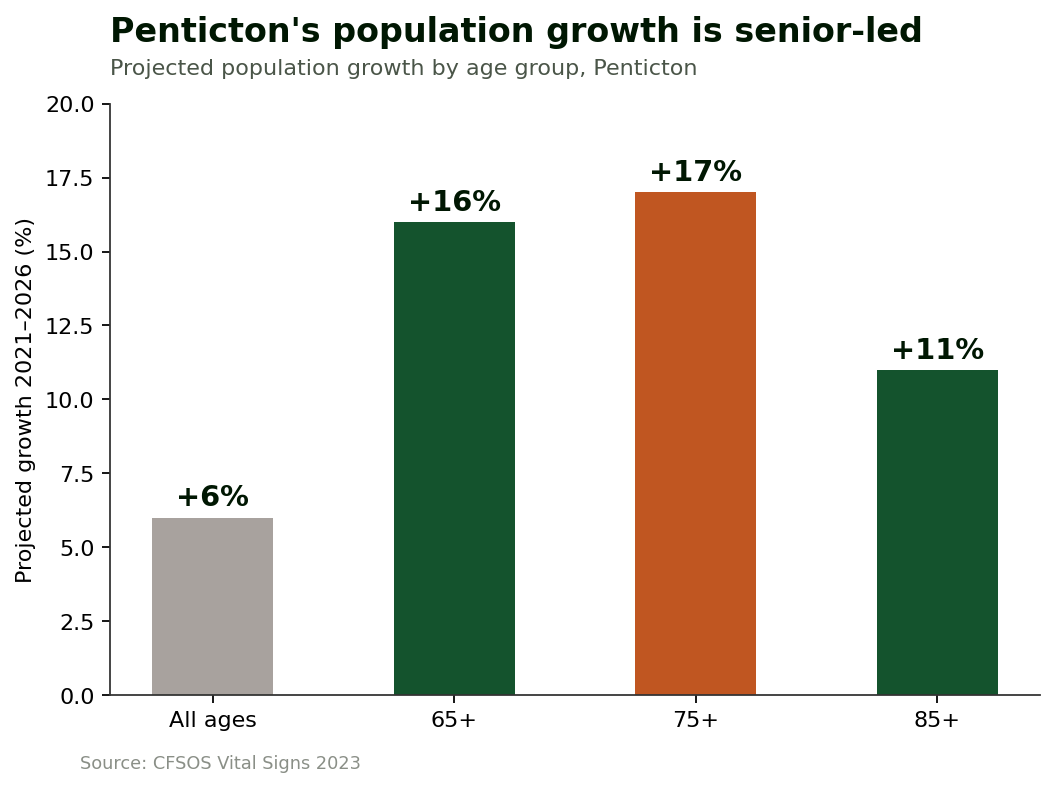
The city already did the homework. In 2021, Penticton commissioned a full Age-Friendly Assessment and Action Plan. Hundreds of seniors participated — through surveys, community engagement, and a photovoice project where older residents documented the barriers they face every day. They told the city exactly what they needed: curb cuts that actually work at crossings. Public washrooms that are clean, accessible, and open year-round. Bus routes that don’t require crossing a busy arterial with a walker. Better connections between the Recreation Centre and the Seniors’ Drop-In Centre on South Main. Support to adapt their homes so they can age in place instead of being forced into care prematurely.
The plan laid out dozens of specific actions with timelines. Five years later, ask a senior on South Main how many of them they’ve noticed. The plan itself predicted this outcome — it warned that without funded coordination and clear ownership, the recommendations would stall. That’s exactly what happened. It’s the same pattern as everywhere else in this platform: good intentions, a report on a shelf, and no follow-through. Accountability isn’t a slogan.
My commitment is implementation. I’ll push council to formally adopt the Age-Friendly Action Plan’s outstanding recommendations into the city’s capital and operating plans with assigned responsibility and public progress reporting — starting with the annual accessibility audit, the public washroom expansion plan, the north-south transit connection, and a home adaptation support program that helps seniors stay in their own homes longer. None of these are big-ticket items. They’re the kind of practical, unglamorous work that makes daily life better for a third of the city — and most of them make the city more accessible for everyone, from parents with strollers to residents with disabilities.
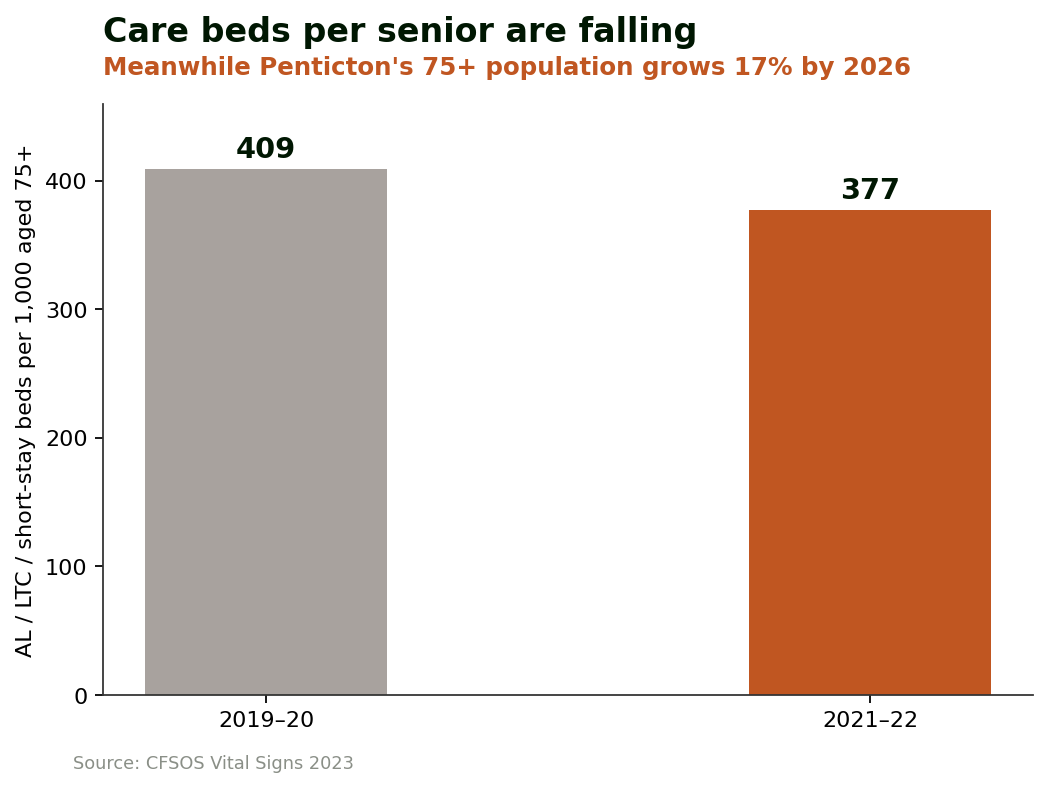
On long-term care, I’ll be honest about jurisdiction the same way I am on treatment beds: Interior Health runs long-term care, not the city. But the numbers demand a louder municipal voice. Penticton has roughly 430 publicly funded long-term care beds for a senior population of more than 11,000 — and wait times at some facilities now stretch from nine months to a year and a half. As the 85-plus population grows, that gap only widens. I’ll use the council table to advocate relentlessly to Interior Health and the province for expanded long-term care capacity in Penticton — and I’ll make sure the city’s land use planning, permitting, and development processes never stand in the way of a care facility that’s ready to build. The same fast-track treatment I’m proposing for housing should apply doubly to seniors’ care.
Aging in Penticton also connects to the rest of this platform. The missing-middle housing strategy includes the single-level, accessible, smaller homes that let seniors downsize without leaving their neighbourhood. The infrastructure consultation commitments exist in part because seniors along South Main were among the loudest voices ignored on the bike lane. And a green bin on the curb, a safer crosswalk, and a bus that actually comes are worth more to most seniors than any speech about respecting elders. Practical help, delivered — that’s the plan.